
ADHD Friendly Interior Design: How Singapore Homes Can Be Designed For Better Focus and Organisation


Modern homes are often designed for aesthetics.
But not always for how people actually function inside them.
For homeowners living with ADHD, the wrong environment can unintentionally create:
• Constant clutter stress
• Difficulty focusing
• Overwhelm from too many visual distractions
• Trouble maintaining organisation
• Mental fatigue from everyday routines
What many do not realise is that interior design can either increase stress — or reduce it.
A well-planned home can support focus, reduce distractions and make daily routines easier to manage.
This is where ADHD-friendly design comes in.
Why Home Environment Matters More For ADHD
ADHD is not simply about attention.
It is largely about how the brain manages information, organisation and stimulation.
Research suggests people with ADHD are more sensitive to:
• Visual clutter
• Noise distractions
• Poor organisation systems
• Overstimulating environments
• Too many decision points
When a home contains too many competing visual elements, the brain must constantly filter information.
This increases cognitive load and can lead to stress or task avoidance.
In contrast, a structured and predictable environment can reduce mental friction and improve daily functioning.
This is why thoughtful interior planning matters.
Tip 1 - Reduce Visual Clutter
Visual clutter is one of the biggest hidden stress triggers.
Too many exposed items create constant background stimulation.
Examples include:
• Open shelving packed with items
• Countertops filled with appliances
• Visible cables
• Unstructured storage areas
A common solution is not fewer belongings.
It is better storage design.
Interior strategies may include:
• Concealed carpentry storage
• Full height cabinets
• Hidden cable management
• Drawer organisation systems
• Closed wardrobe systems
The goal is not minimalism.
It is visual calm.
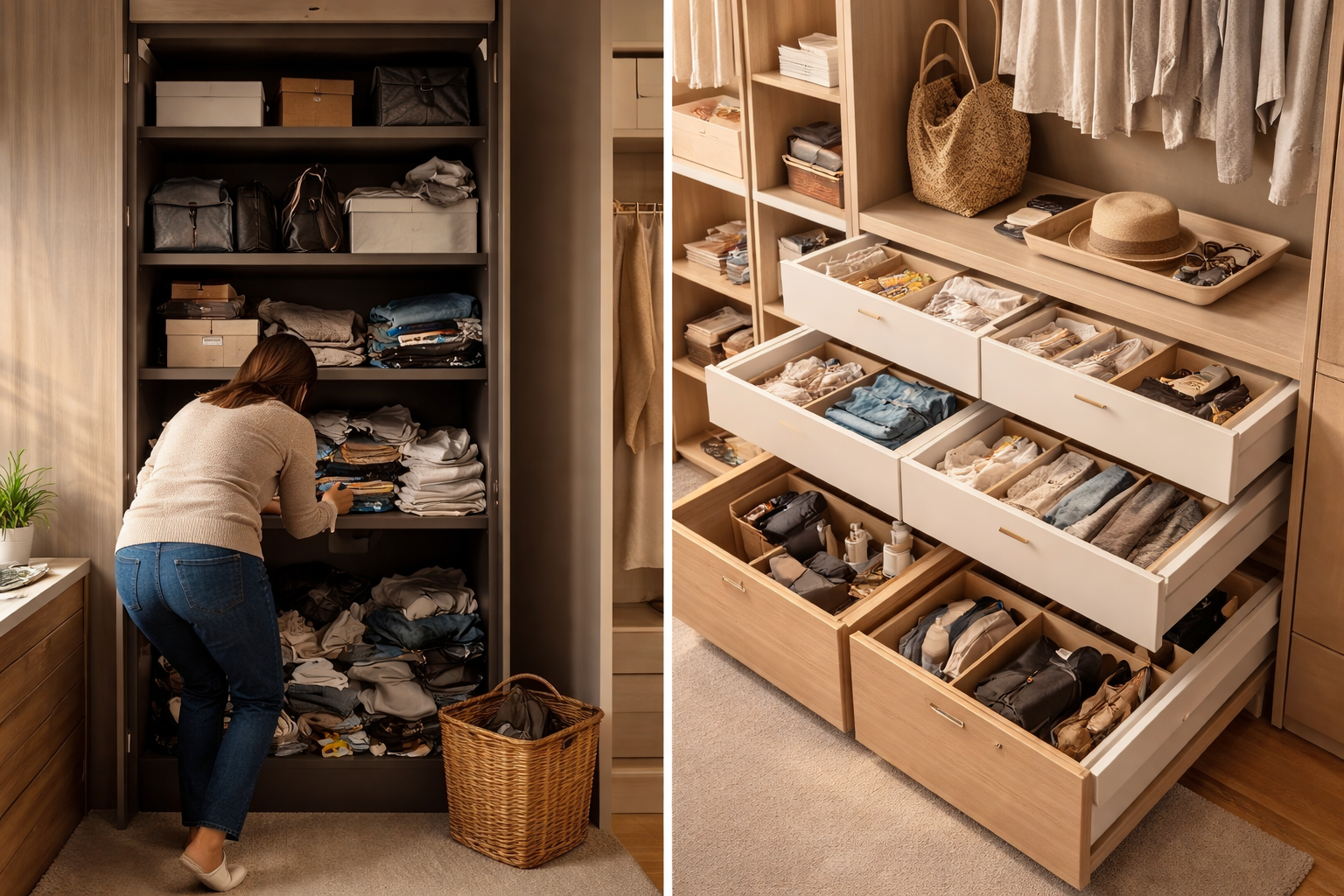
Tip 2 — Design Storage That Makes Organisation Easy
ADHD often affects executive function.
This includes:
• Starting tasks
• Completing tasks
• Maintaining systems
If storage requires too many steps, it usually fails.
Design should reduce effort.
Good storage design examples:
• Pull-out drawers instead of deep cabinets
• Clear compartments
• Labelled storage zones
• Open baskets for daily items
• Drop zones near entrances
Good design makes the correct behaviour easier.
Bad design relies on discipline.
Environment usually wins.
Tip 3 — Use Calm And Controlled Material Palettes
Highly patterned environments can increase stimulation.
This does not mean homes must be plain.
It means being intentional.
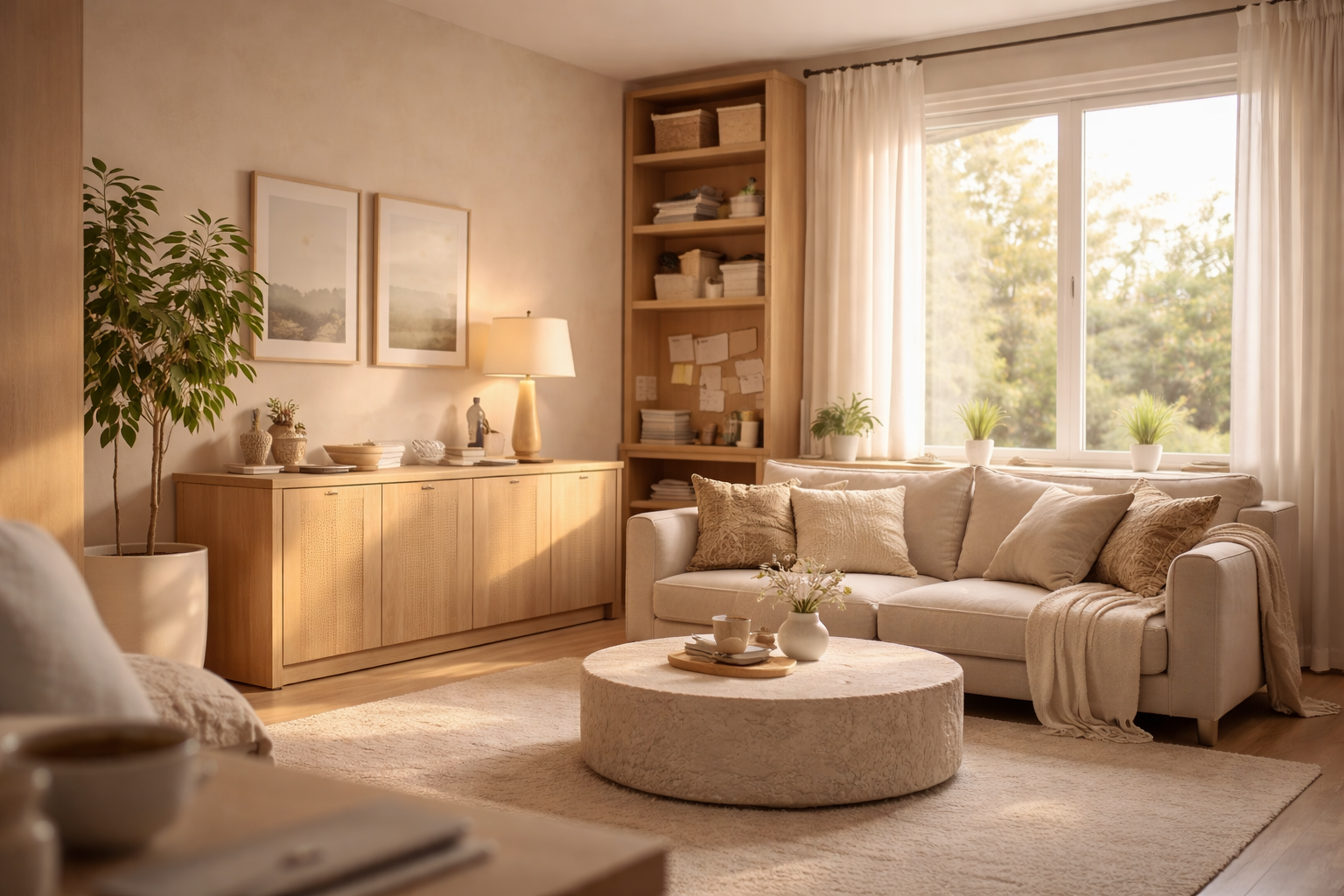
Often effective combinations include:
• Neutral base colours
• Natural wood textures
• Stone textures
• Limited colour palettes
• Matte finishes instead of gloss
Materials with natural texture often feel grounding compared to highly reflective finishes.
This is why many modern wellness spaces use:
• Timber tones
• Soft stone finishes
• Warm lighting
• Textured walls
Calm environments reduce decision fatigue.
Tip 4 — Create Functional Zones
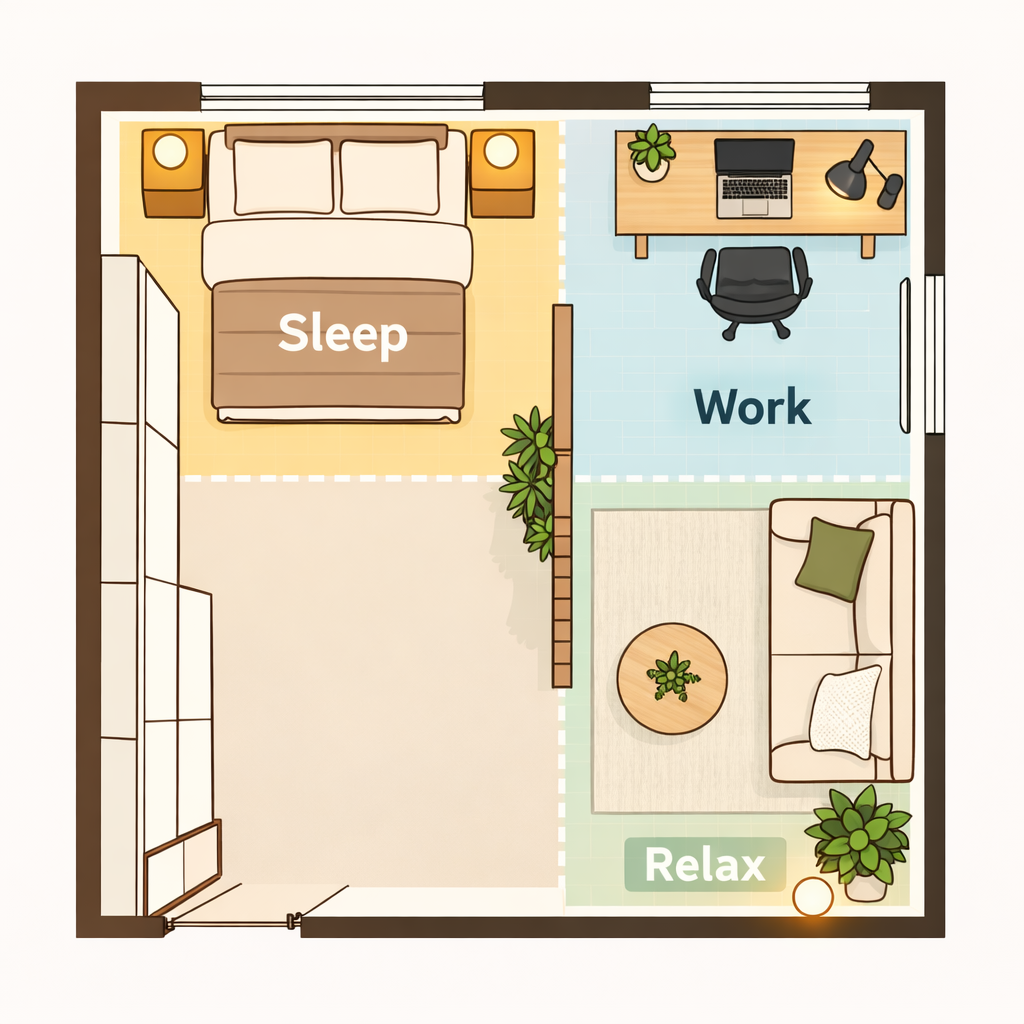
ADHD brains respond well to environmental cues.
Spaces that clearly signal purpose can improve behaviour patterns.
For example:
Instead of one mixed bedroom:
Better zoning could include:
Sleep zone
Work zone
Relax zone
Even small HDB rooms can achieve this through:
• Lighting changes
• Carpets
• Wall colour differences
• Carpentry layout
• Divider panels
The brain reads environment faster than intention.
Design can guide behaviour silently.
Tip 5 — Improve Lighting For Focus
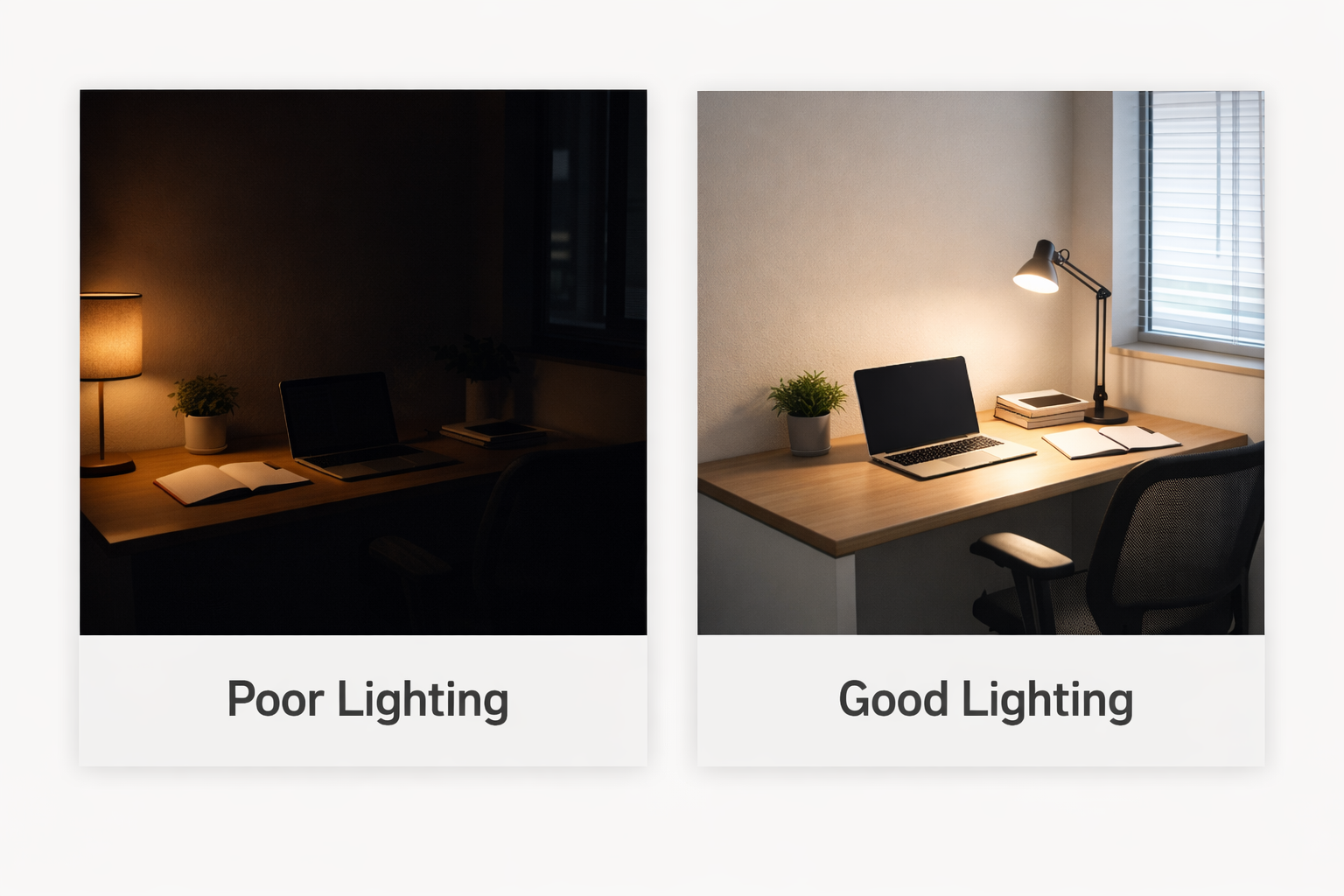
Lighting affects alertness more than many realise.
Poor lighting can increase fatigue.
Good lighting improves clarity.
Effective strategies include:
• Bright task lighting at study tables
• Warm ambient lighting for relaxation
• Natural daylight where possible
• Avoiding overly dim environments
Layered lighting works better than single sources.
This includes:
General lighting
Task lighting
Accent lighting
Lighting should support function.
Not just appearance.
Tip 6 — Design Homes That Support Routines
Many ADHD struggles are not about ability.
They are about friction.
Design can remove friction.
Examples:
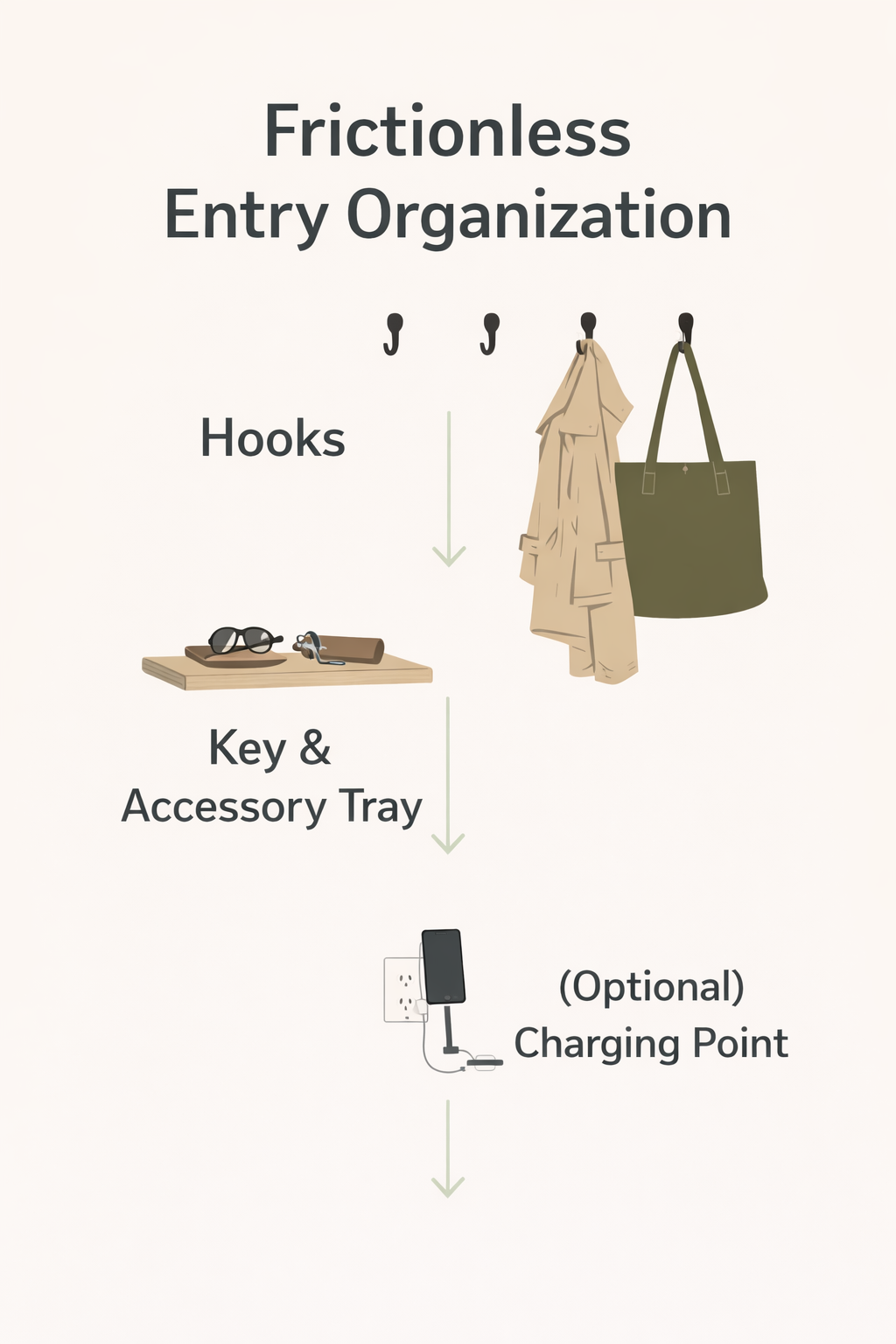
Entry planning:
A built-in shoe cabinet with:
• Key tray
• Mail slot
• Bag hook
• Charging point
Bedroom planning:
Study tables with:
• Integrated drawers
• Cable management
• Charging ports
Kitchen planning:
Zones for:
• Cooking
• Preparation
• Storage
Good design reduces decision points.
This improves consistency.
What This Means For Singapore Homes
ADHD design advice often comes from large Western homes.
Singapore homes face different realities:
• Limited space
• Multi-purpose rooms
• Family living environments
• Storage pressure
This means design must be efficient.
Practical examples may include:
HDB entryway:
Built-in shoe storage instead of open racks.
Bedroom:
Full height wardrobe instead of loose furniture.
Living room:
Concealed TV feature wall storage.
Study areas:
Integrated desk carpentry instead of movable tables.
Kitchen:
Workflow-based cabinet planning.
Small improvements create big behavioural impact.
When ADHD Friendly Design May Help
Not every home needs specialised planning.
But environment planning may help if you experience:
• Constant clutter despite effort
• Difficulty maintaining organisation
• Trouble focusing at home
• Feeling overwhelmed by messy spaces
• Difficulty completing home routines
Design cannot replace medical support.
But it can reduce environmental stress.
And environment affects behaviour more than most realise.
Decision Summary
Interior design is often seen as aesthetic.
But good design is also functional psychology.
For ADHD homeowners, design can help by:
Reducing distractions
Improving organisation
Supporting routines
Lowering mental load
Creating calmer environments
Homes should support the people living inside them.
Not work against them.
How Onyx Approaches Functional Interior Planning
At Onyx & Co. Interior Design, we believe good design goes beyond appearance.
We focus on:
• Practical storage planning
• Lifestyle-driven layouts
• Material selection with purpose
• Functional carpentry design
• Real daily usability
Because the best homes are not just beautiful
They work well for the people living inside them.
If You Are Planning A Renovation
If you or your family struggle with organisation or focus at home, thoughtful interior planning may help create a calmer and more structured living environment.
You may reach out to Onyx & Co. Interior Design to explore practical renovation strategies that improve both aesthetics and everyday functionality.
