
Smart Home Setup in Singapore: What Actually Matters (Before You Spend Money)
Smart homes sound impressive.
Voice control. Automated lighting. Remote access to everything.
But many homeowners in Singapore end up installing systems they barely use.
Not because smart homes don’t work.
But because they were never planned around real daily behaviour.
This guide focuses on what actually matters — so your smart home works for you, not against you.
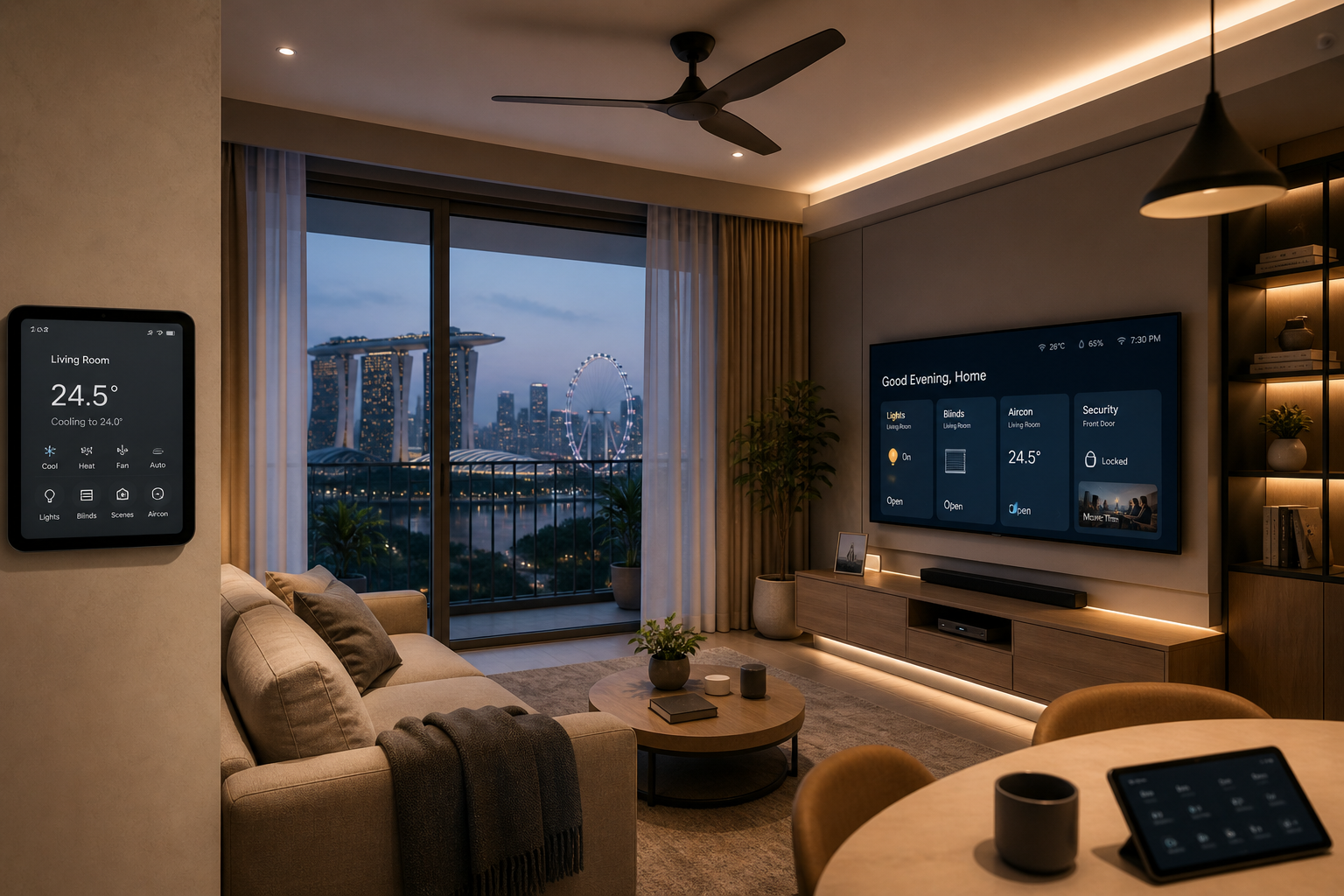
WHY MOST SMART HOMES DON’T WORK
Most setups fail for a simple reason:
They are built around devices, not lifestyle.
Common issues include:
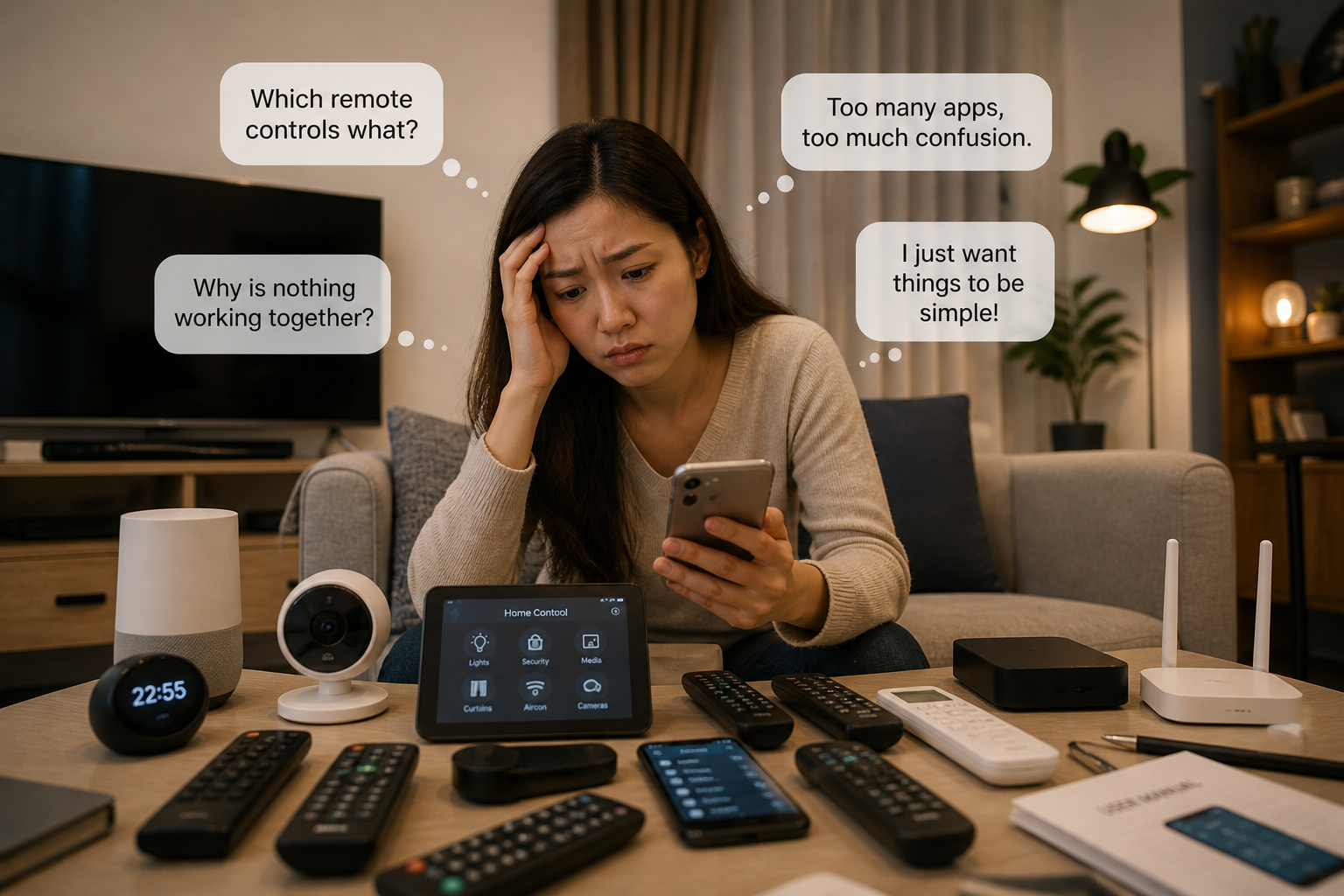
• Too many apps controlling different systems
• Devices that don’t integrate properly
• Features that are rarely used
• Expensive upgrades with little daily impact
The result?
A “smart home” that feels complicated instead of convenient.
WHAT ACTUALLY MATTERS
A smart home should focus on three core functions:
Daily convenience
Energy and cost control
Safety and security
Everything else is secondary.

1.DAILY CONVENIENCE (HIGHEST IMPACT)
The best smart features are the ones you use every day.
Not the ones that look impressive during a demo.
Examples of useful convenience features:
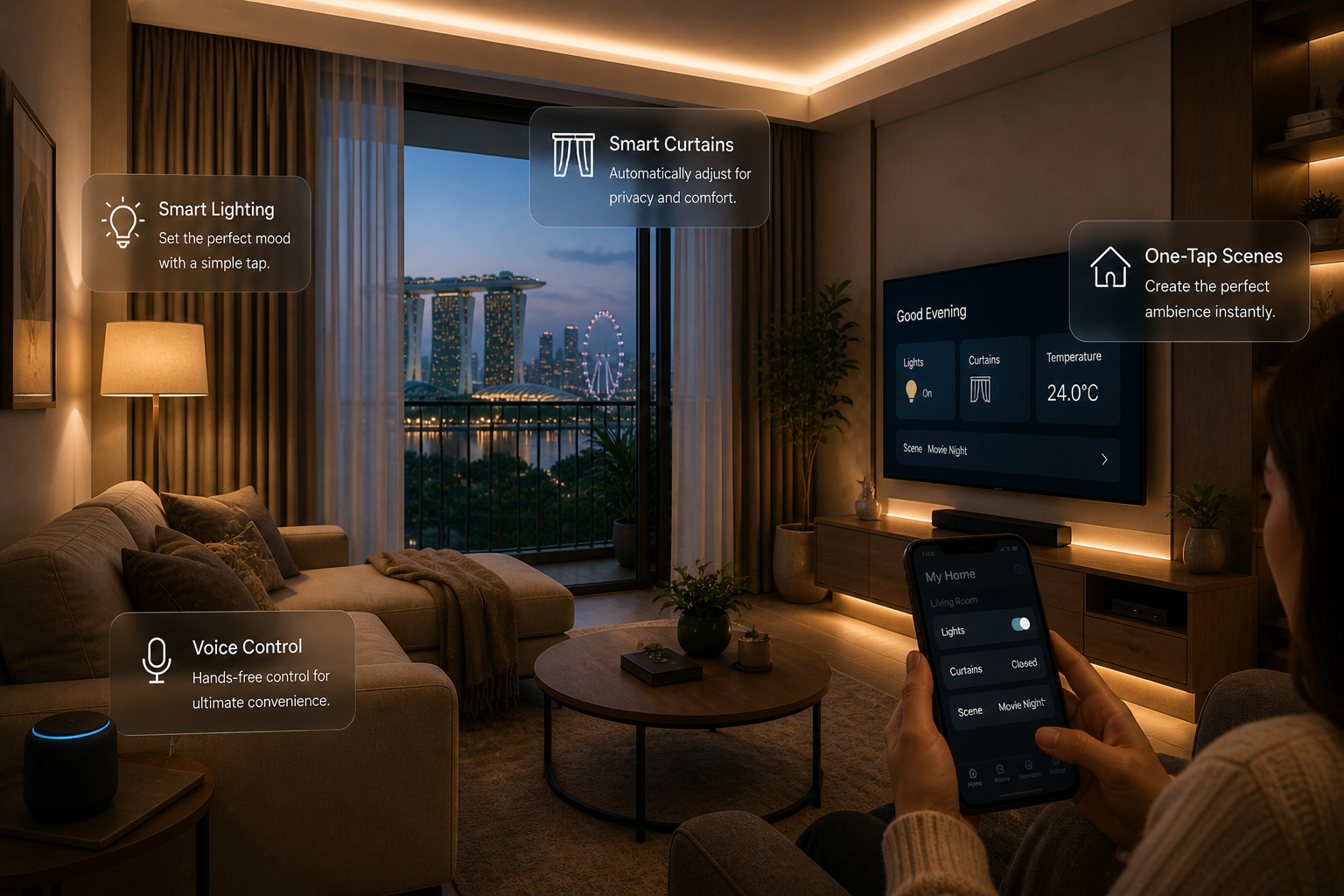
• One-tap “leave home” scene (lights, aircon, switches off)
• Voice control for lighting
• Automated curtains based on time of day
These reduce friction in your routine.
And over time, small conveniences make the biggest difference.
2.ENERGY & COST CONTROL
In Singapore, electricity costs are a real concern.
Smart systems can help — but only if applied correctly.
Useful applications include:
• Smart aircon control (timers, scheduling)
• Smart plugs for appliances
• Energy monitoring to identify waste
The goal is not automation for the sake of it.
It is to control what runs frequently.

3.SAFETY & SECURITY
Security is often the most valuable smart home feature.
Not because it is used often.
But because it provides peace of mind.
Common installations include:
• Digital locks for keyless entry
• Indoor cameras for monitoring
• Door and motion sensors
These are especially useful for:
• Families with children
• Frequent travellers
• Rental property owners

COMMON SMART HOME MISTAKES
Before installing anything, avoid these:
• Buying too many devices at once
• Mixing brands that don’t integrate
• Ignoring WiFi coverage
• Installing after renovation (instead of planning early)
• Overcomplicating control systems
A good smart home should feel invisible.
Not like something you constantly need to manage.

WHAT SHOULD YOU INSTALL FIRST?
If you are just starting, keep it simple.
Start with:
Smart lighting control
Aircon automation
Digital lock
These provide the highest daily impact with minimal complexity.

DECISION SUMMARY
Smart homes are not about having more technology.
They are about reducing effort.
The best setup is not the most advanced.
It is the one you actually use every day.
Planning a smart home during renovation?
The difference between a useful system and a frustrating one often comes down to early planning.
At Onyx & Co., we design homes around how you actually live — not just what looks impressive.
Speak with us to create a smart home setup that fits your lifestyle.
