
E1 vs E0 vs ENF Plywood: Is Paying More for Lower Emission Boards Worth It in Singapore?
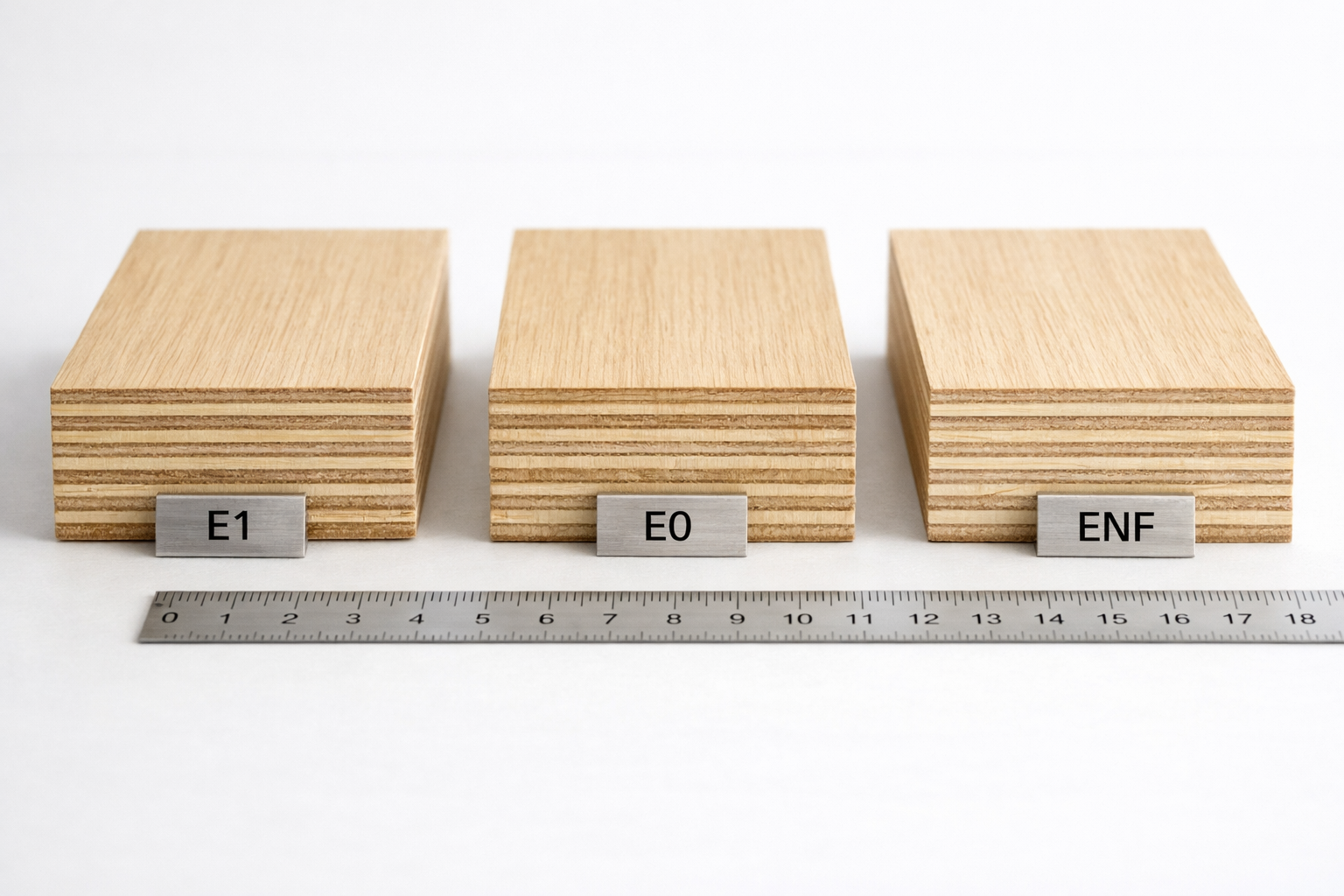
When reviewing renovation quotations in Singapore, homeowners are often asked whether they want to upgrade their carpentry from standard E1 plywood to E0 or ENF boards.
Some contractors present it as a necessary upgrade. Others say E1 is sufficient. The price difference can sometimes add $1,000 to $4,000 to a renovation, depending on how much carpentry is involved.
This leaves many homeowners asking:
Is upgrading emission grade really necessary, or just an optional premium?
Understanding what these emission grades actually affect can help you make a practical decision based on your lifestyle rather than fear or marketing pressure.
The Problem: Many Homeowners Upgrade Without Understanding What Emission Grades Actually Do
Most quotations simply state:
“Upgrade to E0 available”
But do not explain what changes.
Common misconceptions we see from Singapore homeowners:
• Thinking E0 means better quality carpentry
• Thinking ENF makes carpentry last longer
• Thinking higher grade means stronger plywood
• Thinking it eliminates all chemical smell
In reality:
Emission grades only affect formaldehyde release levels.
They do NOT affect:
• Strength
• Structural durability
• Water resistance
• Lifespan
The real purpose of emission grades is:
Indoor air quality.
This matters more in Singapore because:
• Homes are compact
• Carpentry is usually built-in
• Air-conditioning is frequently used
• Windows may remain closed
This increases long-term exposure compared to more ventilated homes overseas.
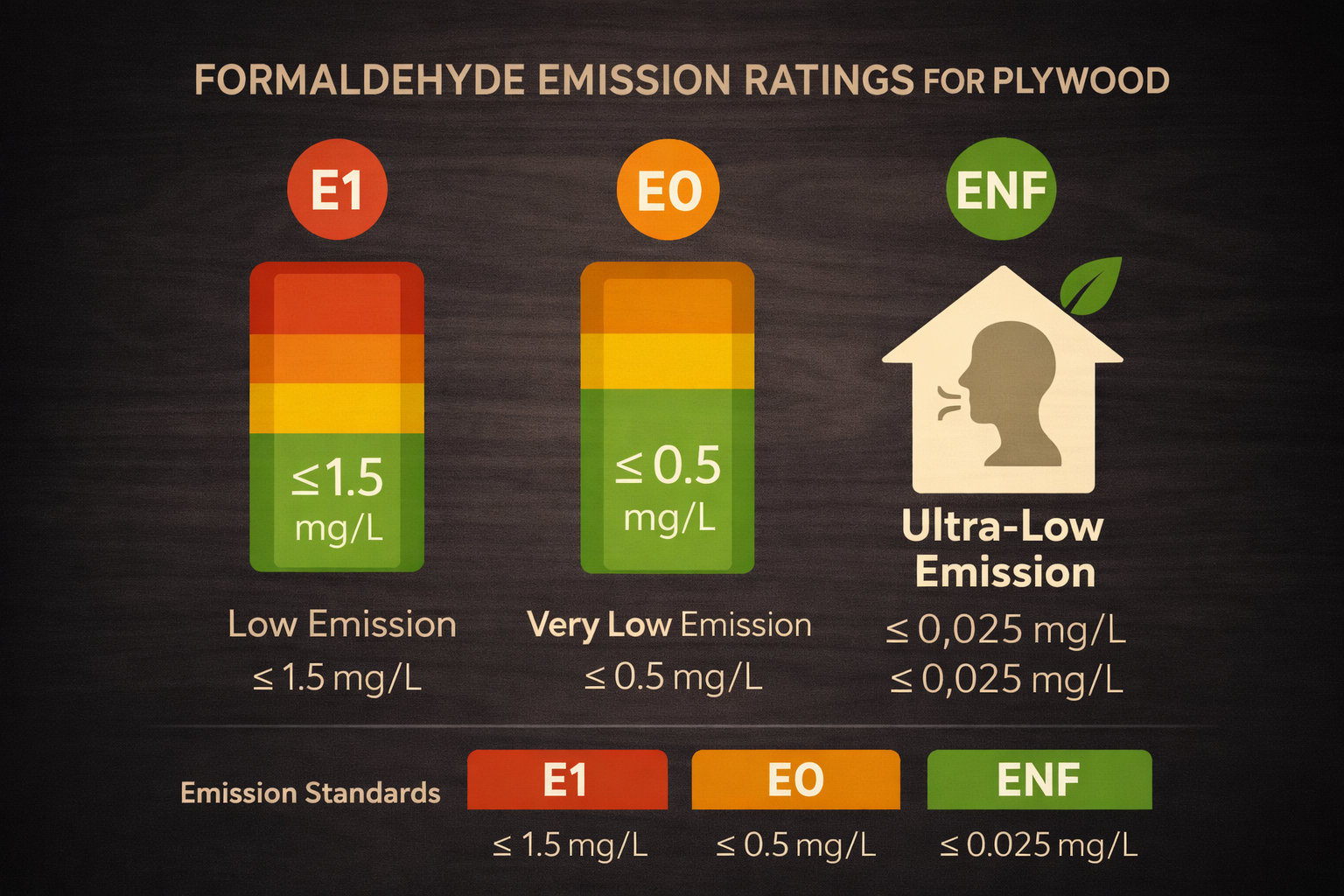
Solutions: How Homeowners Should Decide Between E1, E0 and ENF
Instead of automatically choosing the highest grade, experienced renovation planning focuses on choosing the right grade based on actual needs.
Solution 1 — Choose E1 when budget practicality is the priority
E1 is the industry baseline and already meets acceptable emission safety standards.
Suitable situations:
• Budget controlled renovation
• Rental units
• Homes with minimal carpentry
• Short to medium term stay
For many Singapore homes, E1 performs adequately when combined with good ventilation planning.
Solution 2 — Choose E0 when balancing health comfort and cost
E0 is often considered the most practical upgrade.
Suitable when:
• Long term homeowners
• Families with young children
• Large wardrobes in bedrooms
• Study areas with heavy carpentry
• Homeowners sensitive to chemical smell
E0 typically gives a good balance between cost and comfort.
Solution 3 — Choose ENF when indoor air quality is a priority
ENF is generally considered a premium emission grade.
Suitable when:
• Newborn or toddler households
• Asthma or allergy concerns
• Health conscious families
• Premium renovation projects
• Homes with extensive built-in storage
ENF should be positioned as a comfort upgrade, not a necessity.
Practical Tips Singapore Homeowners Should Know Before Choosing Emission Grades
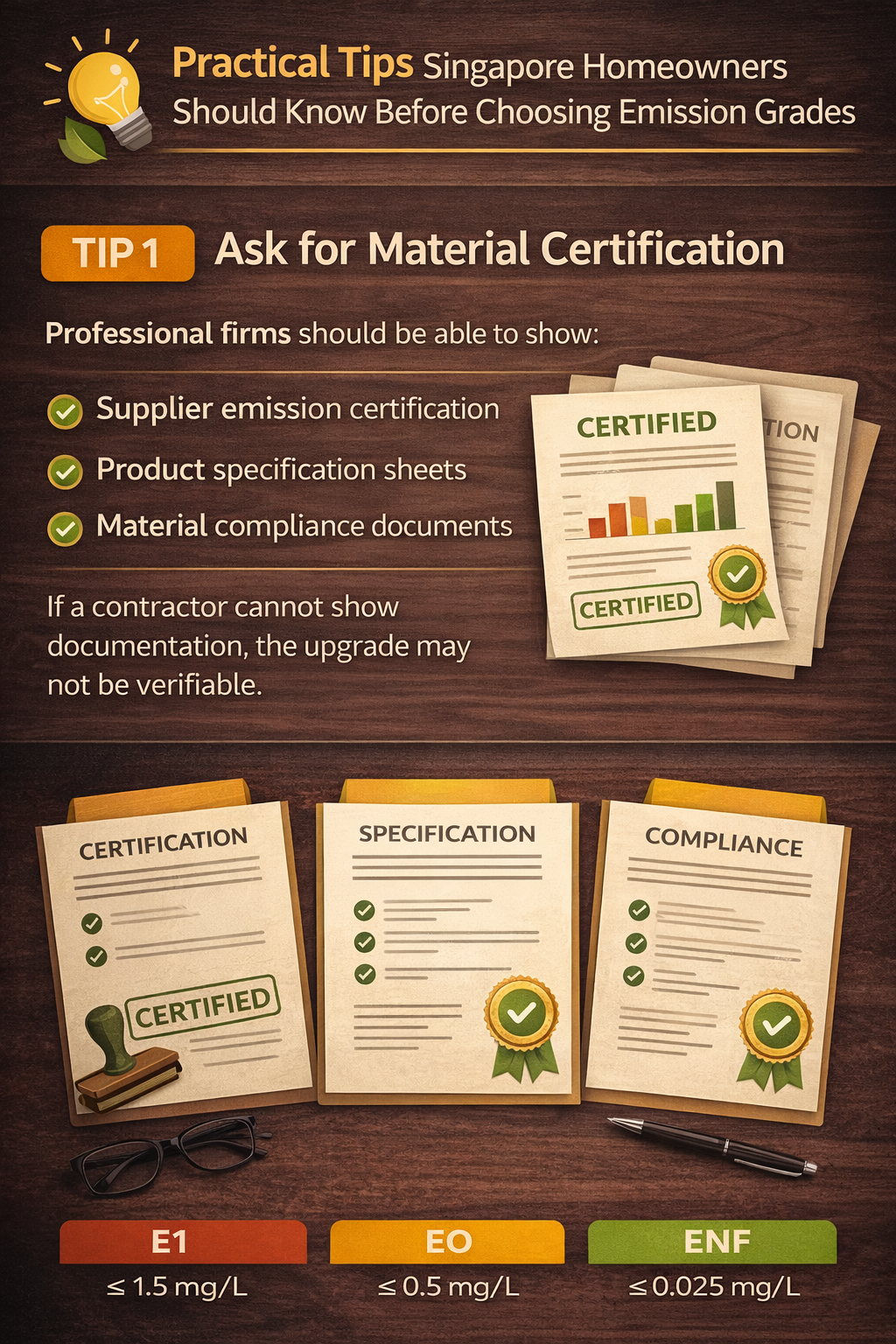
Tip 1 — Ask for material certification
Professional contractors should be able to provide documentation such as:
• Supplier emission certification
• Product specification sheets
• Manufacturer compliance documents
Emission classifications like E1, E0 and ENF typically refer to testing conducted on the board material based on supplier or industry standards.
Make it stand out
Whatever it is, the way you tell your story online can make all the difference.
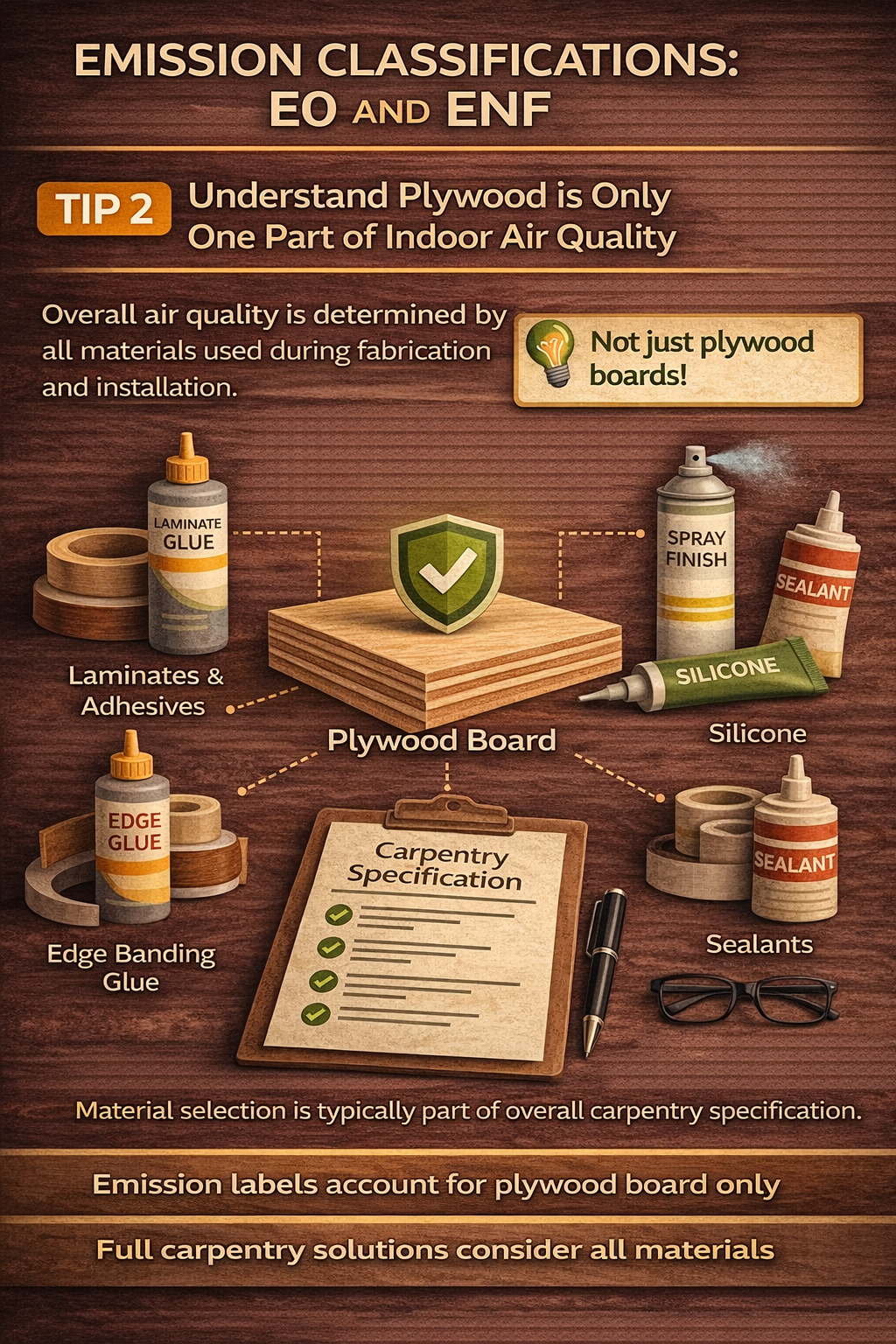
Tip 2 — Understand emission grades apply to the board material itself
Emission classifications such as E0 or ENF generally apply to the plywood board based on manufacturer testing conditions. Overall indoor air quality may also be influenced by other materials used during fabrication and installation such as:
• Laminate adhesives
• Edge banding glue
• Spray finishes
• Silicone
• Sealants
For this reason, material selection is typically considered as part of the overall carpentry specification rather than based on a single component alone.
Tip 3 — Understand the realistic cost impact before deciding
Upgrading emission grades usually affects carpentry cost rather than total renovation cost.
Typical industry estimates in Singapore may range around:
E1 → E0 upgrade:
Approximately 10–20% increase in carpentry cost
E0 → ENF upgrade:
Approximately 10–15% additional increase
Actual differences vary depending on:
• Carpentry quantity
• Supplier pricing
• Project specifications
Homeowners should always confirm actual cost differences with their contractor before deciding.
Tip 4 — Consider ventilation as part of material planning
Material selection works best together with good airflow planning.
Helpful considerations:
• Allowing window ventilation
• Using air purifiers
• Planning mechanical ventilation
• Avoiding excessive enclosed carpentry
Good design often matters more than material upgrades alone.
How Should Singapore Homeowners Decide?
Simple framework:
Choose E1 if your priority is:
Cost efficiency with acceptable safety.
Choose E0 if your priority is:
Better indoor comfort with reasonable cost increase.
Choose ENF if your priority is:
Maximum air quality improvement and long-term comfort.
For most Singapore homeowners:
E0 is usually the practical balance choice.
ENF is typically chosen when health comfort is a top priority rather than a necessity.
Renovation Decisions Should Be Based on Real Living Needs
Material upgrades should be decided based on how you actually live in your home, not just what appears premium on a quotation.
At Onyx & Co Interior, we focus on practical renovation planning and helping homeowners understand where upgrades make real impact and where they may not, so budgets are allocated wisely.
If you want a practical breakdown before confirming your renovation quotation, you may reach out to us for a consultation.
